Is a courier business legal without a license in India? For domestic operations, largely yes — and this genuinely surprises people, because India has never settled on a single, strictly enforced national courier license the way it has for pharmacies or liquor shops. What you do need is standard business and tax registration, which most operators already assume applies, plus a few sector-specific requirements that only kick in once you cross state lines commercially or start shipping internationally.
This makes courier one of the more loosely licensed business categories in this entire series, but “loosely licensed” isn’t the same as “unregulated.” The government has flagged the gap in formal courier regulation publicly for over a decade, and while a comprehensive licensing regime for private couriers still hasn’t fully materialised, the tax and transport rules that do apply are genuinely enforced, and skipping them carries real consequences.
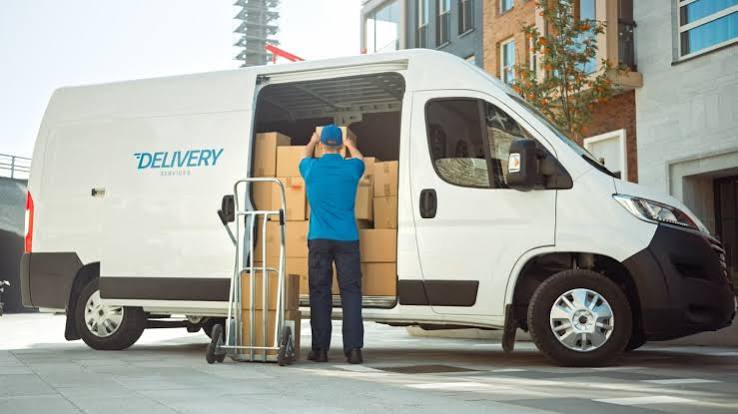
Why There’s No Single, Strictly Enforced Courier License
This is worth understanding historically, because it explains the current gap clearly. Back in 2011, the government publicly acknowledged there was no regulatory mechanism specifically governing private courier companies, with the then-Communications Minister stating plans to amend the Indian Post Office Act to introduce a formal registration procedure for courier operators, precisely because authorities had limited visibility into who was operating and how.
That proposed amendment never fully materialised into a comprehensive, universally enforced courier licensing system. Fast forward to today, and the legal landscape has actually shifted through a different route — the Post Office Act, 2023, replaced the old Indian Post Office Act, 1898, entirely, modernising India Post’s own operations and giving the postal department flexibility on pricing in a competitive courier market. But this new Act primarily governs India Post itself, not a distinct licensing regime specifically targeting private courier companies as a category.
The practical result: a formal postal license from the Department of Posts is generally described as recommended but not always enforced, particularly for hyperlocal and smaller operators. This isn’t a loophole you’re exploiting — it genuinely reflects an underdeveloped area of Indian business regulation that hasn’t caught up with how large the private courier industry has become.
What You Actually Need for Domestic Courier Operations
Even without a dedicated courier license, the standard compliance stack that applies to nearly every service business in India still applies here, and skipping this is where real legal exposure exists:
- Business registration — proprietorship, LLP, or private limited company, chosen based on your scale and funding plans. LLP works well if you’re bootstrapping; private limited becomes more relevant once you’re seeking outside investment
- Shop and Establishment Act registration, a labour law compliance requirement covering working conditions and employee rights, mandatory for most businesses including couriers, whether public or private
- GST registration, which applies with a meaningful nuance covered below
- Trade licence from your local municipal authority for your operating premises
None of these are courier-specific in the way FSSAI is specific to food businesses — they’re the standard obligations any service business carries — but that doesn’t make them optional.
Why GST Registration Comes Sooner Than You Might Expect
This is genuinely the detail that catches new courier operators off guard, and it mirrors a pattern seen across the broader logistics sector. Standard GST rules exempt small service businesses below ₹20 lakh turnover (₹10 lakh in special category states) from mandatory registration. Courier services carry a meaningful exception: GST registration is required for B2B courier services regardless of turnover.
This matters considerably if your business model involves serving e-commerce platforms, retailers, or other companies as clients — which describes most viable courier businesses given how much of India’s courier volume is now driven by e-commerce delivery. A purely individual-to-individual, hyperlocal courier operation might genuinely stay below the threshold longer, but the moment you’re delivering for business clients, the registration timeline compresses considerably.
Vehicle Compliance If You Operate Delivery Vehicles
If your courier business runs its own fleet — bikes, vans, small trucks — rather than purely using third-party transport partners, the same vehicle-level compliance that applies to any commercial goods movement kicks in independently of your business registration:
- Commercial (transport-class) registration for vehicles used in delivery operations
- Goods carriage permits, with the exemption for vehicles under 7,500 kg GVW that applies to light delivery vehicles specifically
- Fitness certificates, commercial insurance, and PUC compliance, maintained on an ongoing basis rather than as a one-time setup
This layer exists regardless of whether a formal courier license applies to your business model, since it’s governed by motor vehicle law rather than courier-specific regulation.
Crossing the Border Changes the Picture Substantially
Everything above covers domestic operation. The moment your courier business handles international shipments — exports or imports moving through courier rather than standard cargo — a genuinely different, more formal compliance framework applies:
- Import Export Code (IEC), mandatory for any commercial international shipment activity
- DGFT (Directorate General of Foreign Trade) compliance, governing the regulatory framework around cross-border courier shipments
- Customs clearance processes specific to courier-mode shipments, distinct from standard cargo procedures
Genuinely useful to know if you’re in this space: 2026 brought real regulatory easing here. The longstanding ₹10 lakh cap on commercial exports via courier mode has been abolished, meaning shipments that previously had to transition into the more document-heavy “Cargo Mode” once they exceeded that value can now move through express courier channels without that invoice-based restriction — a genuine improvement for MSME exporters and high-value goods sectors like handicrafts, designer apparel, and specialised electronics.
Should You Pursue Department of Posts Registration Anyway?
Given that formal postal registration isn’t strictly enforced for most operators, it’s worth asking whether pursuing it voluntarily makes sense. A few reasons it might, even without a legal mandate:
- Credibility with larger B2B clients, some of whom may specifically ask about formal registration status when evaluating courier partners
- Future-proofing against regulatory tightening — given the government’s stated intent going back over a decade to formalise courier registration, treating this space as permanently unregulated is a fragile long-term assumption
- Smoother access to certain institutional or government-adjacent contracts, where formal registration can be a differentiator against unregistered competitors
None of this makes it mandatory today, but for an operator planning to scale into a serious regional or national courier business rather than staying purely hyperlocal, building toward formal registration voluntarily is a reasonable strategic choice rather than a legal necessity.
What Happens If You Skip the Compliance You Do Need
Even without a dedicated courier license, the consequences for skipping the requirements that genuinely do apply are real:
- Operating without proper business registration complicates banking, contracts with B2B clients, and any future fundraising or scaling plans
- Missing GST registration once you’re serving B2B clients or crossing the turnover threshold exposes you to interest, penalties, and potential prosecution, with liability running from the date you should have registered
- Running delivery vehicles without proper commercial registration and permits risks fines and vehicle seizure at checkpoints, entirely independent of your courier business’s own registration status
- Attempting international shipments without proper IEC and DGFT compliance can result in shipments being held at customs, with significant delays and potential penalties
FAQs
Q1. I run a small local courier service delivering only within my own city — do I need a Department of Posts license?
Generally no, this isn’t strictly enforced for hyperlocal operators. You’ll still need standard business registration, and GST registration if you serve B2B clients or cross the turnover threshold, but a dedicated courier-specific license isn’t a hard legal requirement currently.
Q2. My courier business serves e-commerce sellers as clients — does that change my GST obligations?
Yes, significantly. GST registration is required for B2B courier services regardless of turnover, so serving business clients like e-commerce sellers typically means you need to register well before you’d otherwise hit the standard threshold.
Q3. Do I need an Import Export Code if I only occasionally ship a package internationally for a client?
If it’s genuinely occasional and non-commercial, likely not immediately, but any regular or commercial international shipping activity requires an IEC. Confirm your specific pattern of activity with a trade compliance professional if this becomes a recurring part of your business.
Q4. If there’s no strict courier license requirement today, could that change and affect my existing business?
It’s genuinely possible — the government has discussed formal courier registration since at least 2011. Building your business with proper standard registrations now, even beyond the current minimum, protects you if a formal licensing regime is eventually introduced.