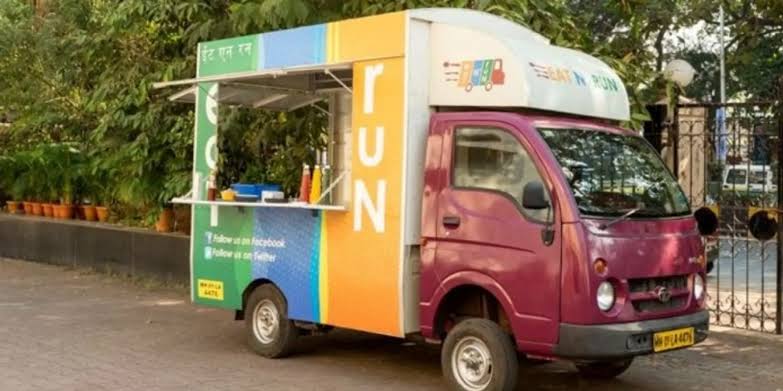
Is a food truck business legal in India? Yes, it is — but only if you treat it as a licensed food operation on wheels, not just a van with a menu board. Most first-time entrepreneurs assume a food truck needs less paperwork than a restaurant because it doesn’t have a fixed address. That assumption gets a lot of trucks shut down within their first few months.
The truth sits somewhere in between. A food truck in India needs fewer approvals than a full-scale restaurant, but more than most people expect, because it sits at the intersection of two separate regulatory worlds: food safety law and motor vehicle law.
Quick Facts: Food Truck Legality in India
| Requirement | Applicable Authority | Mandatory? |
| FSSAI Registration/License | Food Safety and Standards Authority of India | Yes, for every food truck |
| Commercial Vehicle Registration | Regional Transport Office (RTO) | Yes |
| Trade License | Municipal Corporation | Yes, varies by city |
| GST Registration | Central/State GST Department | Conditional on turnover |
| Fire Safety NOC | State Fire Department | Often required for LPG use |
| Vending Zone Permit | Local Municipal Body | Location-dependent |
Yes, It’s Legal — But Only With the Right Approvals
Running a food truck isn’t a legal grey area in India. It’s a recognised business category. FSSAI officially classifies food trucks as mobile food vending units, separate from restaurants, cloud kitchens, and home-based food businesses. That classification exists precisely because the law expects food trucks to operate, and it has built a compliance path for them.
Where entrepreneurs go wrong is thinking one license covers everything. It doesn’t. A food truck is classified as a mobile food vending unit under municipal regulations and simultaneously as a commercial vehicle under the Motor Vehicles Act, 1988, which means operators must satisfy both FSSAI’s food safety rules and RTO’s vehicle regulations. Skip either half, and the business is operating illegally, even with the other half sorted.
FSSAI License: The First Thing You Actually Need
Nothing moves without this one. FSSAI registration is essential for every food business in India, food trucks included, and it applies regardless of how small the operation is.
The license category depends on turnover, and this is where a lot of confusion creeps in because different sources quote different slabs. The widely applied structure works like this:
- Basic Registration — for small operators with modest annual turnover, typically the entry point for a single truck just starting out
- State License — required once turnover crosses the basic threshold and the truck operates only within one state
- Central License — needed if the business crosses state lines or scales into a multi-city operation
If a food truck operates within one state, a single State FSSAI License covers it. If the truck travels and operates across multiple states, a Central FSSAI License becomes mandatory regardless of turnover.
Applying isn’t complicated on paper. You apply online through the FOSCOS portal, and the application asks for details about the vehicle, the kitchen location, your food safety plan, and owner information. Here’s the part people underestimate: FSSAI wants proof of where the food is actually being prepared, not just where it’s sold.
A few things worth knowing before you apply:
- FSSAI licenses aren’t lifetime approvals. Validity runs anywhere from 1 to 5 years depending on the license type, and you must renew before expiry to keep operating legally
- Renewal applications should go in at least 30 days before the license expires — leave it too late and you risk a gap in legal status
- The license certificate must be displayed prominently on the truck itself, both to reassure customers and to satisfy inspecting officers
- Many operators run food prep from a commissary kitchen rather than entirely inside the truck. FSSAI may ask for proof of access to that kitchen during inspection
Vehicle Registration: The Part People Forget
A food truck isn’t just a kitchen — it’s a commercial vehicle first. That means RTO rules apply on top of food safety rules, not instead of them.
The vehicle needs commercial registration, not private registration, because it’s being used to generate income from a public-facing service. Beyond registration, expect requirements around vehicle fitness certification, pollution compliance, and periodic renewal — the same obligations that apply to any commercial vehicle plying Indian roads.
Skipping this step is one of the most common (and most avoidable) mistakes. Entrepreneurs sometimes convert a personal vehicle into a food truck without re-registering it commercially, assuming FSSAI approval is enough. It isn’t. Traffic police and municipal inspectors check vehicle documents independently of food licenses.
Municipal Trade License and Vending Permits
This is where India’s food truck laws get genuinely city-specific, and it’s also where operators get caught off guard most often.
Food trucks require specific licenses depending on the city and state they operate in, commonly including a Trade License from the municipal corporation, health department clearance, and parking or vending zone permits from local authorities.
Cities have taken very different approaches to this:
- Mumbai’s BMC requires food trucks to hold a Mobile Food Vendor License in addition to the standard hawker license, and has designated specific food truck zones in areas like BKC, Lower Parel, and Carter Road
- Bangalore, Pune, Hyderabad, and Chennai each run their own permit systems for street-side and event-based food vending
- Some cities tie truck operation to designated food festival zones or weekend markets rather than allowing free-standing street parking
Before you finalise a business plan, check with the local municipal corporation about where trucks are legally permitted to park and sell. Parking in an unauthorised zone — even with a full FSSAI license — can still get your truck fined or towed.
GST Registration: When It Applies and When It Doesn’t
GST registration applies to food trucks depending on turnover and applicability, following the same general threshold rules that apply to other small food businesses. Once annual turnover crosses the applicable GST exemption limit, registration becomes compulsory, and you’ll need to charge and remit GST on sales.
Even below the threshold, voluntary GST registration is worth considering if you plan to:
- Supply to corporate events, offices, or institutional clients who need GST invoices
- Apply for business loans, where lenders increasingly expect GST compliance as a baseline
- List on food delivery aggregator platforms, some of which prefer GST-registered vendors
Fire Safety: Non-Negotiable If You’re Cooking with Gas
Most food trucks run on LPG cylinders for cooking, and that single fact pulls fire safety regulation into the picture. Fire safety inspections in cities like Mumbai are conducted by the Fire Brigade and tend to be stricter than elsewhere, often requiring LPG leak detection alarms and automatic fire suppression systems installed inside the truck.
Even in cities with lighter enforcement, it’s worth installing basic fire safety equipment regardless — a fire extinguisher, proper cylinder ventilation, and secured gas connections aren’t just regulatory checkboxes. A gas leak inside a moving, enclosed kitchen is a serious risk, and insurers will ask about this before covering the vehicle.
What Happens If You Operate Without These Licenses
Running unlicensed isn’t a minor risk — it’s the single biggest reason food trucks in India shut down within their first year. Consequences typically include:
- On-the-spot fines from FSSAI inspectors or municipal officers
- Seizure of the vehicle or cooking equipment during raids
- Being barred from operating in designated food truck zones or festivals
- Rejection from food delivery platforms, most of which now verify FSSAI numbers before onboarding vendors
- Difficulty securing loans or investor funding, since financial institutions routinely check FSSAI and GST status before extending credit
None of this is designed to discourage food truck entrepreneurship — India’s food truck scene has grown steadily precisely because the compliance path, while multi-layered, is fairly standardised once you understand it. The businesses that struggle are usually the ones that treated licensing as optional rather than sequential.
Frequently Asked Questions
Q1. Do I need a separate FSSAI license for every city my truck operates in?
No, not for every city. If your truck stays within one state, a single State FSSAI License covers all cities in that state. Only inter-state operation requires a Central FSSAI License instead.
Q2. Can I start a food truck with just FSSAI registration and skip the trade license?
No. FSSAI covers food safety, but municipal trade licenses and vending permits are separate requirements enforced by local authorities. Operating without both leaves you exposed to fines and vehicle seizure.
Q3. Is GST registration compulsory for a small, single-truck operation?
Not always. It depends on your annual turnover crossing the applicable GST threshold. Below that limit, registration is optional, though it helps with corporate clients and aggregator platform listings.
Q4. How long does it typically take to get all approvals sorted before launch?
FSSAI licensing alone can take a couple of weeks after document submission. Factor in RTO vehicle registration and municipal permits separately, since timelines vary significantly by city and department workload.