For decades, American homebuyers depended heavily on real estate agents, newspaper advertisements, and scheduled property visits to discover available homes. Information about asking prices, previous sales, and neighbourhood property values was often scattered across different sources.
Zillow changed that experience by bringing property information into a searchable digital environment.
Launched in 2006, Zillow made it possible for ordinary consumers to explore homes, examine estimated property values, and compare neighbourhoods without beginning their search through a real estate agent.
Its influence extended beyond convenience. Zillow helped change who could access housing information, how Americans evaluated property prices, and what consumers expected from real estate websites.
The Housing Information Problem Zillow Identified
Before online property platforms became widely used, much of the American housing search process revolved around real estate professionals.
Agents relied on Multiple Listing Services (MLS), which organised property listings for participating real estate professionals.
Consumers could access property advertisements, but detailed information was not always available in one convenient location.
This created several difficulties:
- Buyers often depended on agents to discover suitable listings.
- Comparing properties across neighbourhoods required considerable effort.
- Historical sales information was not always easy to locate.
- Sellers had limited access to convenient automated valuation tools.
- People researching property markets faced fragmented information.
Zillow’s founders recognised an opportunity to make housing information more accessible to the public.
2006: Property Search Became a Consumer Activity
Zillow was founded by Rich Barton and Lloyd Frink, both of whom had previously worked at Expedia.
The company launched its website in February 2006.
Its early appeal came from allowing users to search for residential properties and examine information that previously required more effort to gather.
Importantly, Zillow did not initially operate simply as another website displaying homes advertised for sale.
It also presented information about properties that were not currently listed.
This expanded the purpose of real estate browsing.
People could investigate their own homes, compare neighbouring properties, and explore housing markets without necessarily planning an immediate transaction.
Property research became an activity that consumers could undertake independently.
The Zestimate Made Home Values a Public Conversation
One of Zillow’s most recognisable innovations was the Zestimate, its automated estimate of a property’s market value.
Rather than requiring every homeowner to request an individual professional valuation, Zillow offered an algorithm-generated estimate using available property information and market data.
This feature attracted considerable attention because it made estimated home values visible to a broad audience.
However, a Zestimate is not the same as a professional appraisal or a guaranteed selling price.
Its accuracy depends on factors including available data, property characteristics, and local market conditions.
Homes with unusual features, limited comparable sales, or inaccurate public records can be particularly difficult to estimate.
Nevertheless, the Zestimate helped popularise the idea that homeowners could monitor estimated property values online.
Maps Changed How Buyers Compared Neighbourhoods
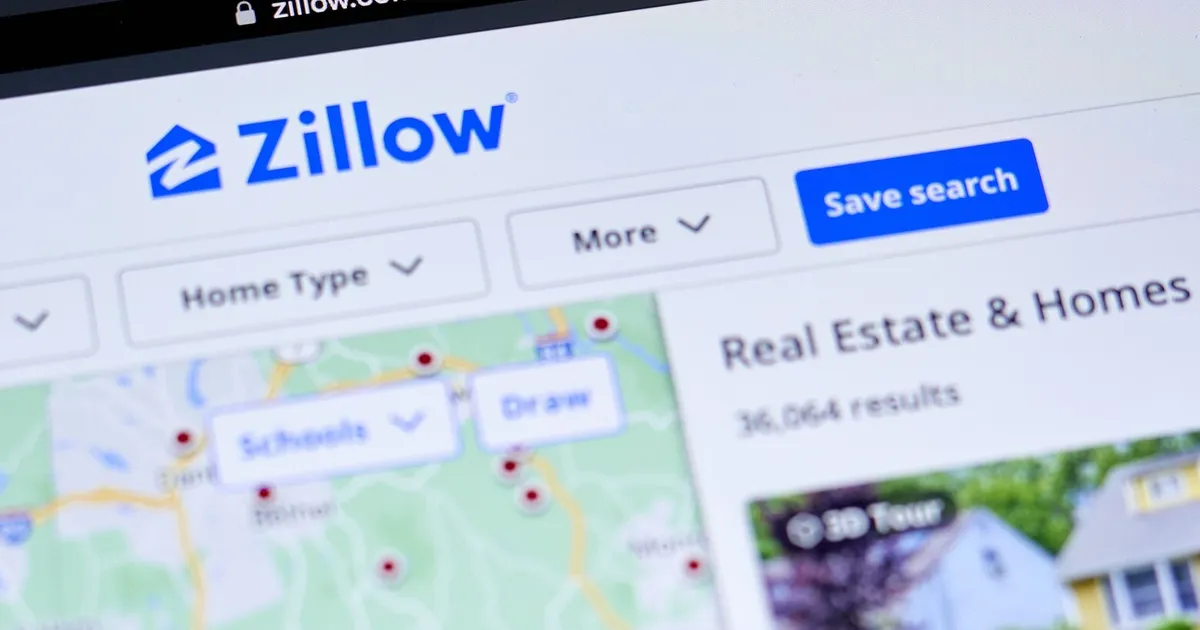
Zillow also helped establish map-based browsing as a familiar part of property searches.
Instead of examining individual advertisements without understanding their surroundings, users could explore listings geographically.
This made location comparisons more intuitive.
A buyer could examine available properties across neighbouring suburbs, compare asking prices, and narrow a search according to preferred areas.
Over time, Zillow incorporated additional tools and information that supported location-based research.
These included property photographs, listing details, rental information, and various neighbourhood-related features.
The broader result was a shift towards researching an entire housing market rather than evaluating one advertised property at a time.
Zillow Expanded Beyond Home Listings
As the platform developed, Zillow became involved in several connected parts of the housing process.
Its services expanded to include:
- Residential properties advertised for sale.
- Rental property listings and searches.
- Connections with real estate agents.
- Mortgage-related information and services.
- Digital tools supporting property transactions.
- Property value estimates and market research.
The company also expanded its industry presence through acquisitions.
Its acquisition of Trulia in 2015 brought together two major American real estate search brands.
This strengthened Zillow Group’s position in the online property information market.
However, Zillow’s expansion was not uniformly successful.
The company entered direct home buying through Zillow Offers, an instant-buying business that purchased homes for resale.
In 2021, Zillow announced that it would wind down Zillow Offers after encountering significant operational and financial challenges.
This demonstrated that operating a property information platform and successfully trading physical homes require different capabilities.
How Zillow Changed the Relationship Between Buyers and Agents
Zillow did not eliminate the role of American real estate agents.
Instead, it changed the stage at which many consumers began working with them.
Buyers could increasingly conduct preliminary research before contacting a professional.
They could compare listings, identify preferred neighbourhoods, and develop expectations about asking prices.
Agents, meanwhile, had to adapt to clients who often arrived with substantial information already collected.
This encouraged a greater emphasis on professional guidance involving negotiations, local market interpretation, property conditions, and transaction procedures.
The internet made information more accessible, but it did not remove the complexity of purchasing real estate.
What Zillow’s Growth Means for India’s Property Market
Although Zillow primarily serves the United States, its development offers useful lessons for India’s digital property industry.
Indian platforms such as Magicbricks, Housing.com, and 99acres also enable consumers to explore properties online.
However, the two markets operate within different legal, regulatory, and information environments.
In India, buyers must pay particular attention to ownership documents, land records, applicable RERA registrations, approved building plans, and project-specific legal requirements.
The availability and consistency of property transaction data also differ across states.
Consequently, a digital estimate or online listing cannot replace independent verification of a property’s legal status.
The broader lesson from Zillow is that convenient access to property information can improve the research process without guaranteeing the reliability of every listing or valuation.
Frequently Asked Questions
Q1. When was Zillow launched in the United States?
A: Zillow launched in February 2006. It was founded by Rich Barton and Lloyd Frink to make residential property information more accessible to consumers.
Q2. What made Zillow different from traditional real estate websites?
A: Zillow combined property searches with estimated home values, historical information, and map-based browsing. Users could also research properties that were not actively advertised for sale.
Q3. Is Zillow’s Zestimate always accurate?
A: No. A Zestimate is an automated valuation estimate rather than a professional appraisal. Its accuracy varies depending on available property data and local market conditions.
Q4. Did Zillow replace real estate agents in America?
A: No. Zillow changed how consumers discover and research properties, but real estate agents continue to assist with negotiations, transactions, and professional advice.
Q5. Is Zillow available for buying property in India?
A: Zillow primarily focuses on the United States housing market. Indian buyers generally use domestic property platforms and must verify ownership, regulatory approvals, and other legal details under applicable Indian laws.