The transformation of Century Textiles and Industries into Aditya Birla Real Estate represents an unusual chapter in Indian corporate history. A company that began by processing cotton in the nineteenth century eventually entered the business of developing premium homes, commercial offices, and large residential communities.
This transition was not simply a change of name. It reflected a broader shift in business priorities, the use of existing land assets, and an effort to establish a recognisable real estate brand in India’s major property markets.
Today, Aditya Birla Real Estate Limited operates its property development business through Birla Estates, connecting more than a century of industrial history with a relatively recent entry into residential and commercial development.

The Industrial Roots Behind the Real Estate Business
The company’s origins date to 1897, when it was established as the Century Spinning and Manufacturing Company.
Its initial operations focused on cotton processing and textile manufacturing.
In 1951, the company came under Birla management, with B. K. Birla playing an important role in its subsequent development.
Over the following decades, Century expanded into several industrial sectors, including:
- Rayon and other man-made fibres
- Cement manufacturing
- Pulp and paper production
- Yarn and denim
- Chemicals and related industrial activities
This diversification established Century as a multi-sector industrial enterprise long before real estate became a major strategic focus.
The company’s industrial background also meant that its business decisions involved substantial physical assets, manufacturing facilities, and long-term capital investments.
These characteristics later became relevant to its property development strategy.
2016: The Beginning of a Different Business Direction
Aditya Birla’s real estate expansion took a more defined shape in 2016 with the establishment of its real estate business under the Birla Estates brand.
The initial focus included commercial developments such as Birla Aurora and Birla Centurion in Mumbai.
This entry provided a foundation for moving into a sector with different operating requirements from traditional manufacturing.
Textile production depends on factories, machinery, raw materials, and continuous manufacturing operations.
Real estate development, by comparison, requires land acquisition or development rights, regulatory approvals, construction management, project financing, and customer sales.
The transition therefore involved building new capabilities rather than simply extending the company’s existing manufacturing activities.
Existing Land Assets Created a Strategic Opportunity
One important aspect of Century’s history was its association with valuable industrial land, particularly in and around Mumbai.
As Indian cities expanded, some historically industrial locations became increasingly attractive for commercial and residential development.
This created opportunities for companies holding strategically located land.
However, industrial land cannot automatically be converted into residential or commercial property. Redevelopment remains subject to title conditions, planning regulations, land-use permissions, and other applicable approvals.
For Century, the ability to evaluate existing land assets alongside new development opportunities provided a potential advantage.
Birla Estates subsequently adopted a strategy involving both owned land parcels and partnerships with other landowners.
Birla Estates Became the Consumer-Facing Identity
Rather than marketing homes primarily under the historical Century Textiles name, the company developed Birla Estates as its property brand.
This distinction helped separate its real estate activities from its industrial heritage.
Birla Estates positioned itself around residential design, customer experience, sustainability, and premium housing.
Its development strategy has included:
- Residential projects in major metropolitan markets
- Commercial office developments
- Projects on owned or acquired land
- Joint development arrangements with landowners
- Premium and higher-middle-income housing
- Mixed-use development opportunities
The approach allowed the business to pursue property development without depending exclusively on land already held by the company.
Residential Projects Marked the Next Stage
After establishing its commercial real estate presence, Birla Estates expanded into residential development.
Birla Vanya in Kalyan and Birla Alokya in Bengaluru were among the projects associated with this phase.
The company’s residential portfolio subsequently expanded to include developments such as Birla Niyaara in Worli, Mumbai.
These projects reflected a movement towards different residential formats and locations.
Kalyan offered opportunities in the wider Mumbai Metropolitan Region, while Bengaluru provided exposure to a major employment-driven housing market.
Worli, meanwhile, represented participation in Mumbai’s premium residential segment.
The geographic differences mattered because each market involved distinct land costs, buyer expectations, infrastructure conditions, and competitive pressures.
Moving Beyond Mumbai
Birla Estates did not restrict its growth ambitions to the Mumbai property market.
Its expansion included the National Capital Region, Bengaluru, and Pune.
This wider presence helped reduce dependence on a single city’s housing demand.
The strategy also required the company to adapt to different regulatory authorities, construction environments, and customer preferences.
For example, residential projects in Maharashtra fall under the applicable MahaRERA framework, while developments in Haryana are governed by the relevant Haryana RERA authority.
Project registration, approved plans, and possession commitments must therefore be examined according to the jurisdiction of each development.
Why the Textile Business Was Discontinued
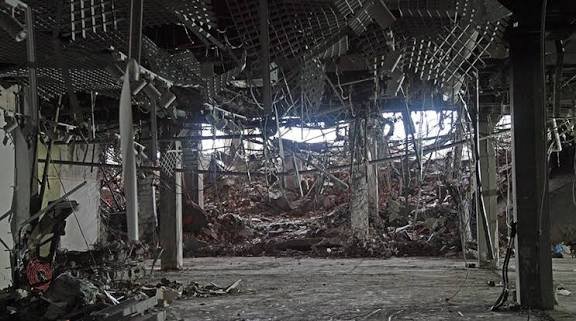
The company’s transition became more pronounced as it reorganised its industrial operations.
Its cement business was merged with UltraTech Cement in 2019, while other business divisions underwent restructuring.
The textile division was subsequently discontinued, with the company citing commercial viability considerations in its corporate reporting.
This marked a significant departure from the activity that originally defined the enterprise.
However, the transformation should not be understood as an immediate replacement of every industrial activity with property development.
The company also retained substantial involvement in pulp and paper during its transition, demonstrating that the shift occurred through a series of corporate decisions rather than one sudden transaction.
The 2024 Name Change Made the Strategy Visible
A major milestone arrived in September 2024, when Century Textiles and Industries Limited formally changed its name to Aditya Birla Real Estate Limited.
The new name communicated the company’s growing emphasis on property development and its association with the Aditya Birla Group.
Importantly, the change did not mean that an entirely new company had been established.
It was a renaming of the existing listed corporate entity.
Birla Estates continued to serve as the real estate development brand, while Aditya Birla Real Estate Limited remained the corporate company.
This distinction is relevant when examining financial reports, corporate ownership, and individual project promoters.
Frequently Asked Questions
Q1. Was Aditya Birla Real Estate previously called Century Textiles?
A: Yes. Aditya Birla Real Estate Limited was formerly known as Century Textiles and Industries Limited. The company formally adopted its new name in September 2024.
Q2. When did the company enter real estate development?
A: The company entered the real estate sector in 2016 through Birla Estates, initially developing commercial properties before expanding its residential portfolio.
Q3. Is Birla Estates different from Aditya Birla Real Estate?
A: Birla Estates is the property development business and brand operating within the Aditya Birla Real Estate corporate structure. Aditya Birla Real Estate Limited is the listed holding company.
Q4. Why did Century Textiles move towards real estate?
A: The transition reflected business diversification, opportunities involving land development, changes in industrial operations, and the company’s strategy to expand into residential and commercial property markets.
Q5. Does Aditya Birla Real Estate develop properties outside Mumbai?
A: Yes. Through Birla Estates, the company has established a presence in markets including Bengaluru, the National Capital Region, and Pune, alongside Mumbai and the wider Mumbai Metropolitan Region.