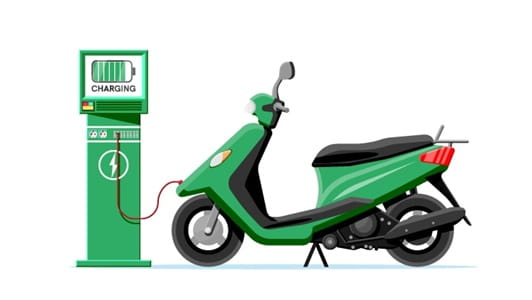
Walk into any EV showroom today and the salesperson will tell you the same thing: you can ride out on a new electric scooter without paying a single rupee upfront. It sounds like marketing. It mostly isn’t. Zero down payment financing on electric two-wheelers has become a genuine, widely available product in India — but only for borrowers who fit a specific profile, and only if you know where to look.
Here is how the whole thing actually works.
What “Zero Down Payment” Really Means
A standard two-wheeler loan covers 75 to 85 percent of the vehicle’s on-road price. You pay the balance — usually Rs. 20,000 to Rs. 40,000 on a typical e-scooter — as down payment. A zero down payment scheme stretches the financing to 100 percent of the on-road price, which includes the ex-showroom cost, registration, insurance, and road tax. The entire amount converts into EMIs.
The lender takes on more risk by funding the full value, so two things follow. First, eligibility filters get stricter. Second, interest rates run slightly higher — typically 9.5 to 15 percent per annum against the 8 to 11 percent you might get with a healthy down payment. The exception is manufacturer-linked financing: brands sometimes run promotional schemes through their finance partners with rates as low as 7 to 8 percent, occasionally with processing fees waived entirely. These promos are model-specific and seasonal, so timing your purchase around a festive offer can genuinely save money.
Who Qualifies
Lenders approving 100 percent finance want certainty you will pay. The checklist usually looks like this:
A CIBIL score of 730-750 or above is the single biggest factor. With a score in this range, most banks and NBFCs will extend the full amount without argument. Between 650 and 730, you may still get approved but with a higher rate or a token down payment requirement. Below 650, zero-DP is mostly off the table.
Stable, provable income matters next. Salaried applicants need 3-6 months of salary slips and bank statements; self-employed buyers need ITRs or bank statements showing regular credit flows. Most lenders set a minimum monthly income of Rs. 12,000-15,000 for two-wheeler loans, though zero-DP schemes often informally require more.
Existing banking relationships help enormously. If you hold a salary account or have a pre-approved offer with a bank, the loan can be sanctioned in minutes through the app, sometimes with no fresh documentation at all.
Where to Apply: Four Routes
Banks. Major private and public banks now run dedicated EV two-wheeler loan products, several offering up to 100 percent on-road funding with tenures of 12 to 48 months. Bank rates are usually the lowest of any channel for good-credit borrowers. The trade-off is slightly slower processing than at the dealership.
NBFCs. Non-banking lenders are the most aggressive players in zero-DP EV finance. Approval criteria are looser, disbursal is fast, and many have tie-ups directly with showrooms. Expect rates 1-3 percent above bank pricing.
Manufacturer finance programmes. Several EV makers operate their own financing arrangements — flexible plans with low or zero down payment, instant approval, and occasionally no-cost EMI offers on specific variants. Because the manufacturer subsidises the scheme to push sales, these can be the cheapest option available, but only on the models being promoted.
Dealership desks. Every large EV showroom hosts representatives from multiple financiers. You can compare two or three offers on the spot. Just be alert: dealership staff sometimes steer buyers toward the lender paying them the highest commission, not the one with the lowest rate. Always ask for the total repayment amount across the full tenure, not just the EMI figure.
The Step-by-Step Process
Start with your credit score — check it free before visiting any showroom, because it determines everything. Next, finalise the scooter and get the exact on-road price in writing, including insurance and registration. Then compare at least three loan offers on the same parameters: interest rate, processing fee, tenure, foreclosure charges, and total interest outgo. Submit your KYC (Aadhaar, PAN), income proof, and bank statements. Approval on digital channels often comes within hours; the lender disburses directly to the dealer, and you ride out. The scooter stays hypothecated to the lender until the last EMI — a standard condition noted on the RC, removed once you close the loan.
The Honest Caution
Zero down payment is convenience, not free money. Because you finance 100 percent of the cost, your total interest outgo is the highest possible for that vehicle. On a Rs. 1.4 lakh scooter financed fully over 36 months at 12 percent, you pay roughly Rs. 27,000 in interest — versus about Rs. 19,000 if you had put down Rs. 40,000. There is also a depreciation trap: e-scooters lose value quickly in the first two years, so a fully financed vehicle can be worth less than the outstanding loan for a stretch of time. If you can comfortably pay even a partial down payment, do it. Use zero-DP when preserving cash genuinely matters — not as a default.
One more timing note: central and state EV incentives reduce the effective price at billing, which directly shrinks the loan you need. Schemes have sunset dates and revisions, so confirm what subsidy applies to your model and state on the day of purchase rather than relying on older listings.
FAQs
Q1. Can I really pay nothing at all upfront?
On true 100 percent on-road finance schemes, yes — though some lenders still collect a small processing fee or first EMI in advance. Confirm the exact day-one outflow in writing.
Q2. What credit score do I need for zero down payment?
Realistically 730 or above. Lower scores usually mean a mandatory down payment or a visibly higher interest rate.
Q3. Are interest rates higher on zero-DP loans?
Generally 1-2 percent higher than loans with a down payment, since the lender carries full vehicle risk. Manufacturer promotional schemes are the main exception.
Q4. Can students or first-time earners get 100 percent EV finance?
Difficult without income proof. The practical route is applying with a parent as co-applicant whose income and credit score anchor the loan.
Q5. Is there a penalty for closing the loan early?
Many lenders charge 2-5 percent foreclosure fees on two-wheeler loans, though some waive it after 6-12 EMIs. Check this clause before signing — it matters if you plan to prepay.