Opening and managing a Demat account for trusts and societies is a process that is significantly more complex than it is for individual investors. Trusts, charitable organizations, cooperative societies, and other non-individual entities have specific regulatory and compliance requirements that must be carefully followed. Understanding these requirements is essential for the trustees, managing committee members, and compliance officers responsible for managing the entity’s investments.
Why Trusts and Societies Need a Demat Account
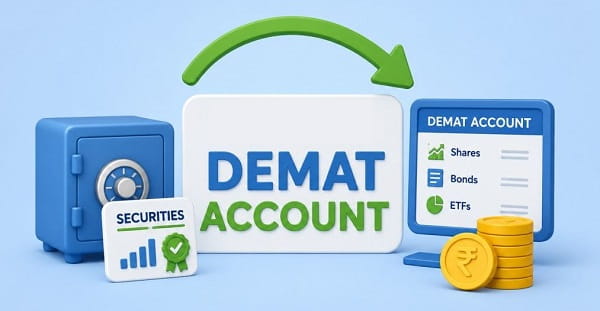
Trusts and societies often hold financial assets including equity shares, government securities, mutual fund units, and bonds as part of their corpus or investment portfolio. With SEBI mandating the dematerialization of securities across the board, holding shares in physical form is no longer a viable long-term option. A Demat account enables these entities to hold securities electronically, participate in corporate actions, receive dividends, and trade in securities in a compliant and efficient manner.
Types of Entities and Applicable Rules
The category of trust or society determines the specific regulatory framework applicable to it. Public charitable trusts registered under the Indian Trusts Act or state-specific trust laws, private trusts, religious trusts, cooperative societies registered under the Cooperative Societies Act, and Section 8 companies registered under the Companies Act all fall into this broad category. Each type has different documentation requirements and compliance obligations when it comes to opening and operating a Demat account.
Documents Required for Opening a Demat Account
The documentation process for trusts and societies is extensive. The Depository Participant will typically require the following:
- Trust deed or society registration certificate as the primary identity document of the entity
- PAN card of the trust or society obtained from the Income Tax Department
- Resolution passed by the board of trustees or managing committee authorizing the opening of the account and naming the authorized signatories
- KYC documents including PAN, Aadhaar, and photographs of all authorized signatories
- List of trustees or managing committee members with their addresses and identity proofs
- Audited financial statements of the entity for the last two years in some cases
- Address proof of the registered office of the trust or society
KYC Compliance for Non-Individual Entities
SEBI and the depositories have stringent Know Your Customer norms for non-individual entities. Trusts and societies must complete the KYC process not just for the entity itself but also for all beneficial owners and authorized representatives. Under PMLA regulations, entities with a turnover or asset base above certain thresholds must also disclose their Ultimate Beneficial Owners (UBOs) — those individuals who ultimately own or control the entity.
The KYC documentation must be periodically updated. Any change in the board of trustees or managing committee members, change in authorized signatories, or amendment to the trust deed must be promptly communicated to the DP to keep the account in good standing.
Investment Restrictions and Compliance Obligations
Trusts and societies are not free to invest in any security they choose. The trust deed or the governing regulations of the society typically define the permitted categories of investments. For example, public charitable trusts registered under state laws may only be permitted to invest in government securities, fixed deposits, or listed securities. Investing outside these permitted categories can attract legal and tax consequences.
Additionally, trusts with tax-exempt status under Section 12A or 80G of the Income Tax Act must ensure that their investment activities comply with the conditions of their registration. Any investment deemed speculative or non-permissible under the Income Tax Act could jeopardize the trust’s tax-exempt status.
Operating the Demat Account
Operating a Demat account for a trust or society typically requires joint authorization from two or more trustees or managing committee members as specified in the entity’s governing document. Instructions for debits, transfers, and pledges must be signed jointly as per the mandate established at the time of account opening. This joint authorization requirement adds a layer of governance and prevents unauthorized transactions.
Annual Compliance and Audit Requirements
Trusts and societies are required to maintain proper books of accounts and get them audited annually. All investment transactions through the Demat account must be properly recorded in the books and reconciled with the DP’s account statement. Any discrepancies must be investigated and resolved promptly. The trust’s auditor will typically review the investment portfolio and verify that all transactions comply with the trust deed and applicable regulations.
Managing a Demat account for a trust or society is a responsibility that demands diligence, proper documentation, and ongoing compliance. Engaging a professional chartered accountant or compliance advisor can help ensure that the entity stays on the right side of the law at all times.
FAQs
Q: Can a trust open a Demat account without a PAN?
A: No. A PAN card is mandatory for opening a Demat account for any trust or society. The PAN must be in the name of the trust or society as an entity, not in the name of individual trustees.
Q: How many authorized signatories can a trust have for a Demat account?
A: There is no fixed maximum, but most DPs require at least two authorized signatories for joint authorization. The number and signing authority should be clearly defined in the board resolution submitted at the time of account opening.
Q: Can a charitable trust invest in equity shares through its Demat account?
A: It depends on the trust deed and applicable state trust laws. Some trusts are restricted to investing only in government securities and approved instruments. The trust deed must explicitly permit equity investment before proceeding.
Q: What happens to a trust’s Demat account if a trustee dies or resigns?
A: The trust must pass a fresh board resolution naming the new trustee and submit updated KYC documents to the DP. The account operations are typically suspended until the updated documentation is processed.
Q: Is the income from a trust’s Demat investments taxable?
A: It depends on the nature of the trust and its registration status. Public charitable trusts with valid 12A registration may be exempt from tax on income applied for charitable purposes. However, speculative or non-permitted investments could attract tax liability.