Is a dairy farm business legal without permissions in India? No — and this answer has just become considerably more urgent for millions of independent dairy farmers following a major FSSAI directive issued on 11 March 2026. For years, a large share of India’s independent milk producers and vendors — particularly those operating outside formal dairy cooperative societies — ran their businesses without any FSSAI registration whatsoever. FSSAI has now explicitly declared this a violation of food safety law and instructed enforcement teams across central and state levels to actively check for compliance.
This matters enormously because dairy has always been one of India’s most closely monitored food categories given the direct public health risk of adulterated or contaminated milk — but enforcement against small, independent producers historically lagged behind the regulation itself. That gap is closing fast. If you’re running a dairy operation without FSSAI registration today, treating this as a low-priority formality is a genuinely outdated position.
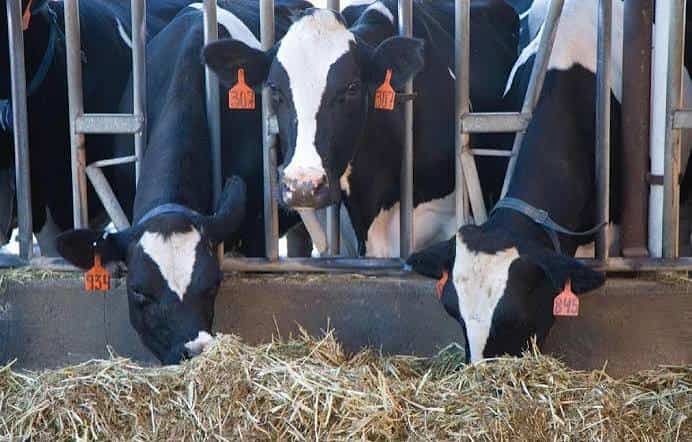
The March 2026 FSSAI Mandate: What Changed for Independent Milk Sellers
This is worth understanding in specific detail, since it directly reshapes the compliance reality for a huge segment of India’s dairy sector. FSSAI’s 2026 advisory specifically targets milk producers, distributors, and sellers operating outside dairy cooperative societies — precisely the segment that has historically operated most informally.
- The advisory states plainly that many milk businesses have been running without proper registration or licensing, which constitutes a direct violation under the Food Safety and Standards Act, 2006
- Food safety officers, licensing authorities, and enforcement teams at both central and state levels have been specifically tasked with checking whether milk producers and sellers hold valid registration
- Given how central milk is to daily consumption for crores of Indians, this isn’t a niche enforcement priority — it’s being treated as a genuine food safety imperative, with regulatory attention that’s unlikely to loosen once enforcement activity ramps up
If your dairy business has operated informally until now specifically because enforcement felt distant or unlikely, that calculation has genuinely changed.
Which FSSAI Category Applies to You
The good news is that compliance is genuinely accessible even for small-scale farmers, once you understand which category fits your operation:
- Basic FSSAI Registration applies to farmers with annual turnover below ₹12 lakh — this is a remarkably light requirement, costing as little as ₹100 per year, making it genuinely accessible even for the smallest independent milk sellers
- State Licence becomes necessary for those supplying to dairies, processing units, or operating at higher turnover levels beyond the Basic Registration threshold
- Central Licence applies to large-scale dairy processors operating at genuinely significant volume
Whether you’re a small milk vendor selling 50 litres a day or a larger operation supplying processed products at scale, some level of FSSAI registration applies — the question is only which tier, not whether it applies at all.
If You Sell Through a Cooperative: You May Already Be Covered
This is genuinely useful to understand before assuming you need separate registration. Milk sold through dairy cooperative societies may already fall under the cooperative’s own FSSAI license, meaning individual member farmers supplying exclusively through that cooperative structure may not need separate registration themselves. If you sell any portion of your milk independently — direct to consumers, local shops, or sweet shops outside the cooperative arrangement — that independent activity likely does require its own registration, even if your cooperative supply is already covered.
Compositional and Hygiene Standards You Must Meet
Beyond simply holding the right registration category, FSSAI compliance for dairy involves genuine operational standards under the Food Safety and Standards (Food Products Standards and Food Additives) Regulations, 2011:
- Raw milk must be tested for adulteration at reception — checking for starch, water, detergent, and urea contamination, among other common adulterants
- Products like paneer carry specific compositional standards, including minimum fat content requirements on a dry weight basis
- Cold chain compliance matters genuinely — dairy products transported or stored above safe temperatures (generally below 4°C) is one of the most common findings during FSSAI inspections, and violations here carry real consequences
- Milking areas need to be kept clean, animals disease-free, and water supply hygienic — these aren’t abstract standards but the actual criteria inspectors check against during facility visits
A2 Milk and Other Special Labelling Claims: Extra Compliance Required
If your dairy business markets milk specifically as “A2” or makes other organic or natural claims, this triggers additional compliance beyond your standard FSSAI registration. There’s no separate dedicated license specifically for A2 milk, but using this label requires appropriate certification and compliance with FSSAI’s broader organic and natural claim standards. Making this kind of premium claim without the backing certification exposes you to misrepresentation risk on top of standard food safety compliance — verify what specific documentation supports any “A2” or organic labelling before using it commercially.
Veterinary and Animal Husbandry Registration
Separate from FSSAI compliance entirely, dairy farms must register with the local veterinary or animal husbandry department, which categorises farms by herd size across a defined range — from Category I through Category V depending on the number of animals kept. This registration sits alongside, not instead of, your FSSAI obligation, since one covers animal husbandry oversight while the other covers food safety specifically for the milk product itself.
Pollution Control Clearance for Larger Farms
Following a pattern similar to poultry farming covered elsewhere in this series, larger dairy operations require pollution control clearance given the genuine waste management considerations involved — animal waste disposal, wastewater from milking and cleaning operations, and general environmental impact scale with herd size. Smaller operations may fall below the threshold requiring this specific clearance, but confirming your exact obligation with your State Pollution Control Board protects you from an unexpected gap as your farm grows.
Standard Business Registrations Still Apply
Beyond the dairy-specific requirements above, the underlying business needs standard registration:
- GST registration, required once turnover crosses ₹40 lakh for goods (₹20 lakh for services), or immediately if you supply inter-state or sell through e-commerce platforms
- Trade licence from your local municipal authority, typically renewed annually
What Happens If You Skip FSSAI Registration Now
Given the specific March 2026 enforcement directive, the consequences here carry genuinely more immediate weight than they might have a year or two ago:
- Operating without FSSAI registration or license is explicitly identified as a violation under the Food Safety and Standards Act, and enforcement teams have been specifically directed to check for this across both central and state levels
- Selling expired dairy products past their best-before date carries fines reaching up to ₹5 lakh
- An expired FSSAI license means you must stop operations entirely until renewal is complete — treat renewal deadlines seriously, applying at least 30 days before expiry through the FoSCoS portal to avoid an operational gap
- Cold chain violations remain one of the most common inspection findings, and given how directly dairy safety ties to public health, this specific area draws particular enforcement attention
FAQs
Q1. I’ve been selling milk locally without any FSSAI registration for years — do I need to do anything urgently given the 2026 advisory?
Yes, genuinely worth acting on promptly. FSSAI has specifically instructed enforcement teams to check for exactly this kind of unregistered operation, and Basic Registration for small producers is inexpensive and accessible, making delay a genuinely unnecessary risk now.
Q2. I sell all my milk through a dairy cooperative — do I still need my own FSSAI registration?
Often not separately required, since cooperative-sold milk may already fall under the cooperative’s own license. If you sell any portion independently outside that arrangement, that specific activity likely needs its own registration.
Q3. What’s the actual cost of getting compliant if I’m a small farmer selling under ₹12 lakh worth of milk annually?
Genuinely minimal — Basic FSSAI Registration for this turnover tier costs as little as ₹100 per year, making compliance accessible even for the smallest independent dairy operations.
Q4. Can I market my milk as “A2” without any special certification, since I know my cows are the right breed?
No, using an “A2” label specifically requires appropriate certification and compliance with FSSAI’s organic or natural claim standards, separate from your standard dairy registration. Confirm the required certification before using this label commercially.