Every high-rise apartment, metro station, airport terminal, and mall escalator moving millions of Indians daily relies on an industry that rarely gets noticed until something goes wrong. Remarkably, a homegrown Indian brand actually leads this market by volume, outpacing several global giants that have operated in the country for decades — a genuinely rare feat in an industry typically dominated by multinational engineering conglomerates.
| Rank | Company | Founded/Established in India | Known For |
| 1 | Johnson Lifts | 1963 | India’s largest manufacturer by volume, 16,000+ lifts annually |
| 2 | KONE India | 100+ years globally | Machine Room-Less pioneer, smart building integration |
| 3 | Otis India | 800+ cities presence | World’s oldest elevator company, Gen2 series |
| 4 | Schindler India | 1998 | IoT-based monitoring, metros & airports specialist |
| 5 | TK Elevator (ThyssenKrupp) | Established | TWIN elevators, MULTI rope-less system |
| 6 | Mitsubishi Electric | Established | Cutting-edge engineering, energy efficiency |
| 7 | Hitachi India | 2008 | Residential lifts, escalators, moving walkways |
| 8 | Hyundai Elevator | Established | Diverse commercial offerings |
| 9 | Fujitec | Established | Global manufacturer, Japanese engineering |
| 10 | SWIFT Lifts | Recent specialist | Compact battery-driven residential lifts |
1. Johnson Lifts – India’s Largest Domestic Manufacturer
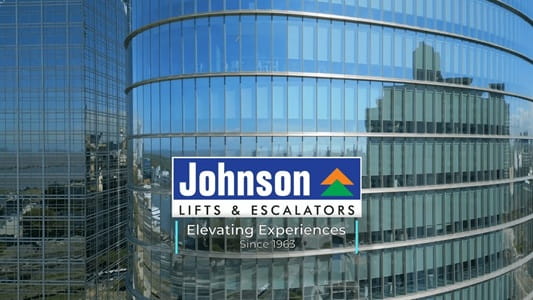
Johnson Lifts, founded in 1963, stands as the leading elevator manufacturer from India, remarkably matching or surpassing global giants in overall market share.
- Manufactures over 16,000 lifts and 1,000 escalators annually, reflecting genuine scale and manufacturing efficiency.
- Currently holds the position as market leader in terms of both volume and market share within India.
- Known for cost-effective products backed by a strong nationwide service network, making it accessible across residential, commercial, and industrial sectors alike.
2. KONE India – The Machine Room-Less Technology Pioneer
KONE, a global leader in elevator and escalator technology based in Finland, operates in India through KONE India with over 100 years of global experience.
- Widely recognized as a pioneer in Machine Room-Less (MRL) technology, leading the market in “Smart Building” integration.
- Offers elevators summonable via smartphone apps or integrated with building security systems.
- Operates over 4,800 employees with regional offices across four major Indian cities, and its Indian manufacturing unit supplies support components to the USA, Australia, and Germany.
- Cloud-connected diagnostics predict maintenance needs before malfunctions occur, minimizing unexpected downtime.
3. Otis India – The World’s Oldest Elevator Brand
As the world’s oldest elevator company, Otis maintains a massive footprint in India spanning over a century of vertical transportation heritage.
- Operations extend across 800 cities in India, with advanced technologies like the Gen2 system remaining a benchmark for reliability.
- Particularly strong in the modernization segment, helping older buildings upgrade to modern safety standards.
- Renowned for robust global engineering, excellent safety track record, and strong resale value contribution to properties.
4. Schindler India – The Public Infrastructure Specialist
Schindler, a Swiss company known for its quality, entered India in 1998 and quickly became a preferred choice for high-footfall public infrastructure.
- Metro stations and airports across various parts of India commonly rely on Schindler lifts.
- Distinguished by its concentration on IoT systems for real-time elevator condition monitoring.
- Digital innovations like PORT Technology improve passenger flow specifically in high-rise buildings.
5. TK Elevator (Formerly ThyssenKrupp)
TK Elevator has launched some of the most genuinely game-changing innovations in the elevator industry.
- Introduced TWIN elevators, an innovative system, alongside the MULTI rope-less system for advanced mobility solutions.
- Supports high-rise and smart city projects with sustainable, space-saving vertical transportation solutions across India.
6. Mitsubishi Electric
Mitsubishi Electric, a Japanese company, has earned international recognition for its innovative, quality, and energy-efficient elevator solutions.
- Known specifically for cutting-edge technology and reliable engineering across its Indian operations.
- Positioned strongly in the premium commercial and high-rise segment.
7. Hitachi India – The Diversified Vertical Transport Specialist
Hitachi India Pvt Ltd was established in 2008 as a 100% subsidiary service company of Hitachi, handling installation and maintenance of vertical lift systems.
- Offers a wide product range spanning residential lifts, escalators, and moving sidewalks/walkways.
- Known for quality and reliability, with substantial investment in marketing and servicing elevator systems across India.
8. Hyundai Elevator and Fujitec
Rounding out the global players, these two companies bring genuine international engineering diversity to India’s elevator market.
- Hyundai Elevator offers diverse commercial elevator solutions, contributing to India’s growing vertical mobility infrastructure needs.
- Fujitec brings established Japanese engineering standards, competing alongside other global manufacturers in India’s commercial and residential segments.
9. SWIFT Lifts – The Residential Home Elevator Specialist
SWIFT Lifts specializes specifically in compact, battery-driven residential lifts, differentiating itself from the commercial-grade focus of larger global brands.
- Offers models like the SWIFT Pro and SWIFT Lite, targeting homeowners specifically rather than large commercial or high-rise developments.
- Represents a growing niche of specialized residential lift manufacturers competing alongside broader global players like KONE, Otis, and Schindler.
Choosing Between Brands: What Actually Matters
- Machine Room-Less (MRL) lifts save space and offer better energy efficiency, making them the standard choice for most modern buildings, while traditional traction lifts with machine rooms remain preferred for very high speeds or heavy freight applications.
- Average elevator lifespan with professional maintenance runs 20-25 years, after which a modernization or full replacement is typically recommended.
- Compare warranty terms, local service availability, and safety certification rather than relying on brand name alone, since service response times can vary considerably by region even among top global brands.
- For homes specifically, specialized residential brands like SWIFT Lifts may offer more compact, cost-effective solutions than commercial-grade global brands designed primarily for high-rise applications.
The Bottom Line
India’s elevator industry combines the volume leadership of homegrown manufacturer Johnson Lifts with the technological sophistication of global giants KONE, Otis, and Schindler, while TK Elevator, Mitsubishi, and Hitachi bring further engineering diversity across commercial and residential segments. As India’s urbanization accelerates and smart building integration becomes standard, these established manufacturers—offering everything from IoT-based predictive maintenance to space-saving Machine Room-Less technology—are well-positioned to support the country’s continued vertical growth.
FAQs
Q1. Which elevator company leads India’s market by actual volume and sales?
Johnson Lifts currently leads by volume and market share, manufacturing over 16,000 lifts annually across India.
Q2. Are Machine Room-Less lifts better than traditional traction lifts for homes?
MRL lifts save space and offer better energy efficiency, making them the standard choice for most modern residential buildings.
Q3. How long does a typical elevator last before needing replacement?
With professional maintenance, elevators typically last 20-25 years before requiring modernization or full replacement.
Q4. Should I choose a global brand or a specialized residential lift company for my home?
Specialized brands like SWIFT Lifts often offer more compact, cost-effective options specifically designed for residential spaces.